

Key Takeaways from Environmental Justice and Health Disparities Symposium

Karmella Green is a Project Advisor on MSC’s Movement Infrastructure and Innovation Center (MIIC) Team, working closely with a number of Fiscally Sponsored Projects (FSPs), including the Center for Engagement, Environmental Justice and Health (CEEJH). CEEJH confronts environmental injustices and health inequities rooted in environmental racism and structural inequality. Based in Maryland, CEEJH works closely with strategically undervalued communities; blending education, outreach, community science, collaborative problem solving, and grassroots partnerships to create lasting impact.
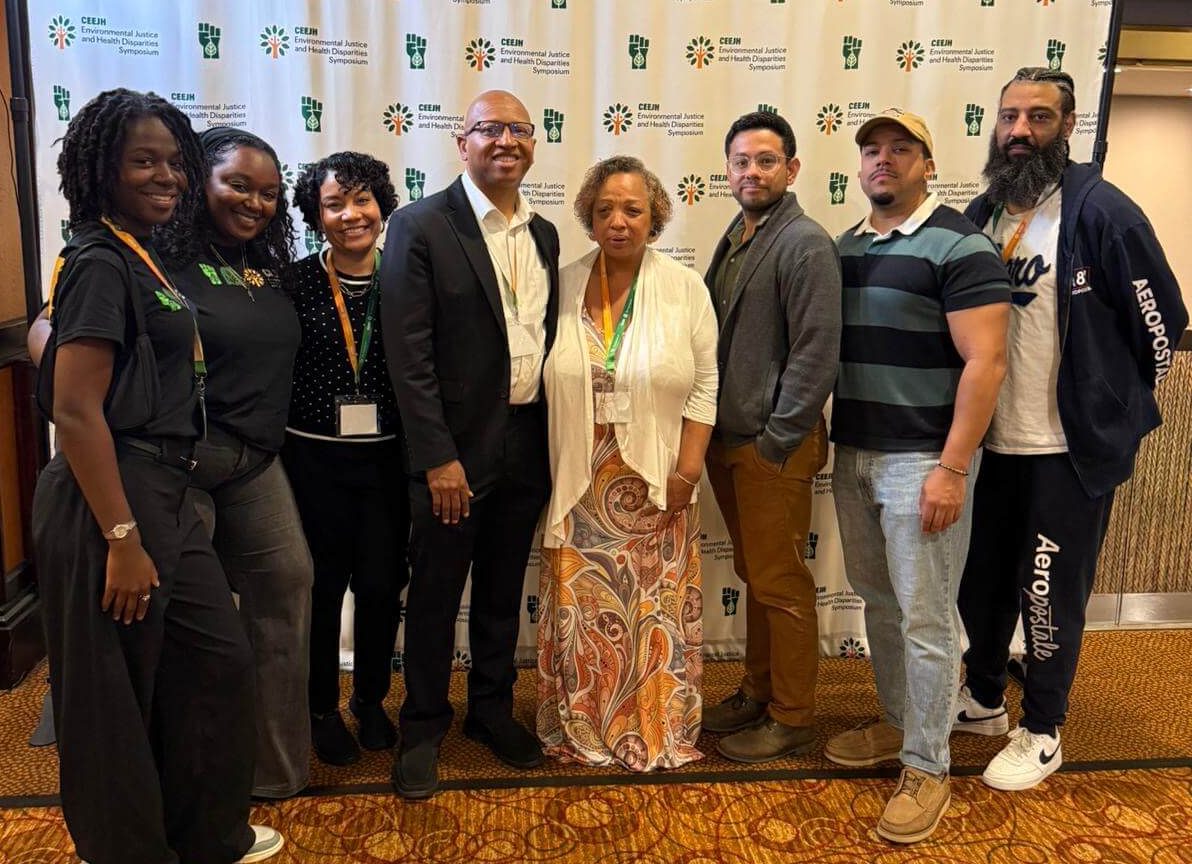
In September, Green attended CEEJH’s 11th Annual Environmental Justice and Health Disparities Symposium, a gathering of community leaders, experts, and activists dedicated to advancing environmental justice and addressing health disparities. This year’s event, a mix of in-person and hybrid sessions, was held in Baltimore, Md. Other MSC staffers were able to join some of the virtual sessions as well.
The theme for this year’s symposium was “The People’s Agenda: Resistance, Resilience, and RESToration.” Below, Green shares some key takeaways from the event.
Baltimore Bound
When I signed up for the CEEJH symposium, I didn’t know what to expect, but I was teeming with excitement and curiosity. As CEEJH’s Project Advisor, I witnessed the planning of this momentous event over the previous twelve months – a peek behind the veil, so to speak. Although I had the opportunity to build relationships through computer screens with CEEJH staff, I looked forward to meeting these dynamic individuals in person, while they were in their element. I couldn’t wait to learn more about the environmental justice space, especially in a historic city like Baltimore.
Takeaway One: The Hidden Power of Justice-Impacted Individuals
Increasing my understanding of the many social justice issues intersecting with environmental justice was eye opening. When I attended the “Equity, Energy, and Clean Energy Workforce Development” session, I did not expect to learn about justice-impacted talent and the hidden power of implementing fair chance initiatives and practices within the workplace. A second chance revolution is occurring with the untapped talent of justice-impacted (aka formerly incarcerated) individuals: Employers across the U.S. are opting to transform their workplace policies through recruitment and talent acquisition. Companies can choose to work at the state and/or local level to enact fair chance agreements to foster career growth opportunities through remote work, registered apprenticeships, and professional development programs that are extended to eligible candidates exiting the prison or legal system.
The session covered various programs and organizations working to support historically excluded populations through training and employment opportunities in renewable energy sectors. The panelists discussed strategies for reentry support, including mental health services and fair chance hiring practices, while emphasizing the importance of community collaboration and addressing systemic barriers to employment.
“In terms of climate change and the impact of these climate hazards on marginalized communities, it’s important for all of us to come together and fight back.”
Raye Elliott, co-founder and executive director of FLIPP Inc., discussed the nonprofit’s mission to train and educate historically excluded populations, including BIPOC, women, veterans, justice-impacted individuals, and rural communities. The organization offers a training program that certifies and places justice-impacted individuals and adult dislocated workers into green jobs, with emphasis on retention through supportive services. Elliott underscored the program’s success in training participants with zero prior exposure to renewable energy, achieving an 86% employment rate and a 79% first-time pass rate on exams.
Takeaway Two: Justice Over Equity
Mike Ewall, founder and executive director of Energy Justice Network, emphasized the importance of environmental justice over environmental equity during “Equity, Energy, and Clean Energy Workforce Development.” Presenting an environmental justice analyzer that can conduct studies within seconds by analyzing data points such as uranium mines, coal plants, and trash incinerators, Ewall demonstrated how the tool reveals racial disparities – particularly impacting Indigenous people near uranium mines and Black and Latine communities near coal plants and waste incinerators. Ewall explained that environmental justice requires redesigning industrial society to prevent harm, rather than merely spreading damage equally.
Just last month, as representatives from some 200 nations attended the United Nations’ COP30 conference, the administration (which did not send a representative to the U.N.’s annual climate summit) introduced a series of proposals to encourage fossil fuel drilling. But while the current administration continues to roll back environmental policies and programs, grassroots activists and allies are building collaborative models for community growth. Speaking on the panel with Ewall, Rev. F. Wayne Henley discussed his Virginia community’s efforts to oppose the construction of a gas plant and their subsequent focus on workforce development. Henley, a Baptist minister and leader of Concerned Citizens of Charles City County, outlined the organization’s vision to build a collaborative model for community growth through initiatives in solar recycling, sustainable farming, and green workforce training.
Takeaway Three: “Data is Not Neutral”
During the opening keynote address, William J. Barber III, CEO and founder of Rural Beacon Initiative, discussed the importance of data centers and Artificial Intelligence (AI), noting that while they have the potential to be a tool for humanity, their placement is often within communities that have historically faced environmental harms. Discussing the added strain these centers place on an already overburdened energy grid, in addition to the importance of documenting environmental health concerns such as instances of asthma in Black and brown communities, Barber noted, “Data is not neutral.”
During the “Pollution Politics: Environmental Justice and Health Issues in District of Columbia, Maryland, and Virginia” session, Staci Hartwell reminded attendees that equity includes public health, environmental health, economic development, and prosperity centered around having clean air and a healthy environment. Hartwell, the Chair Emerita and Environmental and Climate Justice Advisor to the NAACP Maryland State Conference (which represents 24 counties) Quad Leaders, spoke of the disproportionate health burdens placed on those living near flight paths, highways, and agricultural regions. The NAACP Maryland State Conference’s 2022 Discovery Report serves as a roadmap for environmental and climate justice across Maryland.
According to the Prince George’s County Council website, the Qualified Data Center Task Force was formed to study “the potential risks, community benefits, and revenue potential of Qualified Data Center uses in Prince George’s County.” Hartwell noted that locals continue to develop a deeper understanding of the impacts of data centers on their communities. Thanks to a local rally and social media push, the number of signatures on a petition to stop construction of a data center in Landover, Md., shot up from 5,000 to over 21,000 (as of this writing). Thanks to these efforts, the city council put a temporary pause on data center construction.
Takeaway Four: Amplifying Accessibility
I appreciated how accessible CEEJH and their partners made information available prior to and during the event. Whova, the platform used to coordinate the symposium, was interactive and user-friendly, allowing attendees to book sessions, watch recordings, and network. One of my MSC colleagues joined remotely through the Whova app, and I attended a pre-symposium session to gather more context of what to expect. The series of pre-symposium virtual conversations were designed to highlight the key themes, community voices, and urgent issues shaping this year’s event. It felt as though it was a very intentional choice made by the organizers and speaks to the foresight of the leaders and team involved in orchestrating a conference of this scale.
In addition to the virtual and in-person sessions, in-person events provided further engagement for attendees. The “Art of the People: Resistance, Resilience, and RESToration” exhibit featured artwork and showcases by local artists from Baltimore, Md. Musical performances included a drumming circle, providing participants with the opportunity to dance and break the ice. Stops on an impact solidarity tour, led by the South Baltimore Community Land Trust, included the CSX Transportation’s coal facility – whose neighbors have felt the effects of coal dust pollution for years.
“The number of folks representing the Black diaspora spoke volumes to the importance of representation within the environmental justice space.”
Takeaway Five: Time to “Come Together and Fight Back”
During a session on Hurricane Katrina, Dr. Sacoby Wilson, Founder and Executive Director of CEEJH, said, “In terms of climate change and the impact of these climate hazards on marginalized communities, it’s important for all of us to come together and fight back.” This pre-symposium webinar, “Katrina’s Legacy and Trump’s Environmental Rollbacks: An Intimate Chat with Dr. Beverly Wright,” explored the historic challenges and community resilience surrounding Hurricane Katrina.
Wright shared her personal experiences and observations about the impact of Hurricane Katrina on New Orleans, highlighting how the disaster exacerbated existing social and economic inequalities, particularly affecting the city’s predominantly Black population. She described how the city’s low-wage economy, lack of financial resources among working-class residents, and the destruction of the public school system disproportionately affected African Americans, leading to significant population displacement and a loss of the city’s middle class. Wright emphasized the importance of educating people, particularly white individuals, to combat racism and environmental injustices, and called for difficult conversations within families and communities. “We want justice, not just equity,” Wright said.
It was inspiring to be in community with advocates who illuminated a recurring theme throughout the symposium: Do not rely on the government to suddenly decide environmental justice is a critical issue. Communities can work together to create sustainable solutions that address environmental justice issues in their own backyards.
A Final Note on Representation
In addition to connecting with CEEJH staffers in person, it was powerful to be in the presence of so much brilliance: Scientists, environmentalists, justice-impacted individuals, policymakers, doctors, and more in the room. While I connected with a diverse group of people, a significant number of attendees were part of the African American diaspora. It was inspiring to be in community with a diverse group of people committed to sharing their knowledge and experiences to create a sustainable environment for all – and the number of folks representing the Black diaspora spoke volumes to the importance of representation within the environmental justice space.
You can follow CEEJH’s journey on Facebook, Instagram, and LinkedIn. If you are able, please consider making a gift to support their ongoing work.